
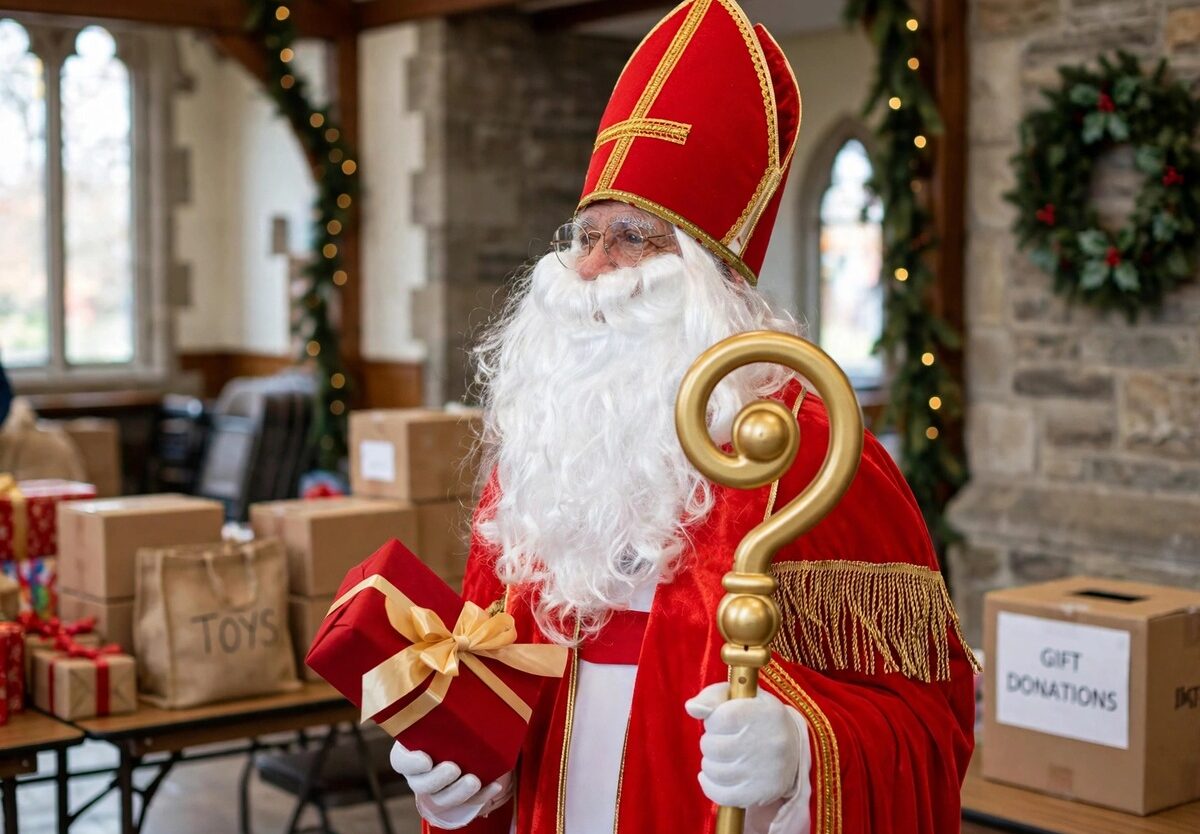
Bone fragments attributed to Saint Nicholas were stolen from a French basilica and reportedly burned and crushed by a suspect. Other major relics, including his skull and larger bones, remain preserved in Italy.
Bone fragments attributed to Saint Nicholas were stolen from a French basilica before Christmas, and police say the suspect later admitted burning and crushing them.
The fragments were kept in a reliquary at the Basilica of Saint-Nicolas-de-Port. Saint Nicholas was a fourth-century Bishop of Myra and is recognized as the historical figure behind Santa Claus. That gives the theft a wider cultural significance, but it does not mean every relic associated with him disappeared.
Other remains were preserved elsewhere. Catholic practice can place a saint’s bones in separate locations, and Saint Nicholas’s skull and larger bones are in a crypt at the Basilica di San Nicola, located in Bari, Italy. They have been kept there since 1087.
The theft occurred at the French basilica in Meurthe-et-Moselle, within Lorraine, roughly 12 kilometres southeast of Nancy. On November 2, the parish priest went to the police station in nearby Dombasle-sur-Meurthe to report that the reliquary was gone, according to L’Est Républicain.
Police eventually located a suspect at his home. During questioning, he reportedly acknowledged that he had acted spontaneously, broken open the protective case, and taken the reliquary. The reported motive was not financial, and the account did not describe a plan to sell the fragments on the black market.
Instead, reports say the man burned the ancient bone fragments and crushed the remains. Catholix, a French Catholic media outlet, reported that he told investigators he acted from a “desire to destroy” and viewed the relic as “fetishism.” The reported explanation points to hostility toward the object itself, not an attempt to profit from its value.
The suspect’s name has not been made public. That gap has fueled unsupported online speculation about his identity and background, but the available account does not establish those claims. The known sequence is narrower and more concrete: a reliquary was taken, a suspect was detained at home, and the fragments were reportedly destroyed after the theft.
Why It Matters
The incident matters because the reported loss was not a simple disappearance. A religious object was taken from a place of worship and, according to the account, deliberately destroyed through burning and crushing. For the basilica and the people who regard relics as sacred, that turns a theft into desecration. It also explains why the survival of other remains matters: the French fragments were part of a wider devotional tradition, not the only physical connection Catholics preserve to Saint Nicholas.
The case also exposes a deeper unresolved divide over what a relic represents. To the basilica, the fragments carry religious meaning and historical association. To the suspect, the reported view was something to be destroyed. His identity has not been released, and online speculation about his background does not answer the central questions. The public account leaves those questions open while making one consequence clear: the basilica and those who value its relics are left dealing with a loss that cannot be reversed.
The suspect’s name has still not been released. For now, the account ends with the reported confession, the destruction of the French fragments, and the continued preservation of the skull and larger bones in Bari. That makes the loss serious, but it is not the disappearance of every relic associated with Saint Nicholas.
Source: notthebee.com

Leave a Comment