
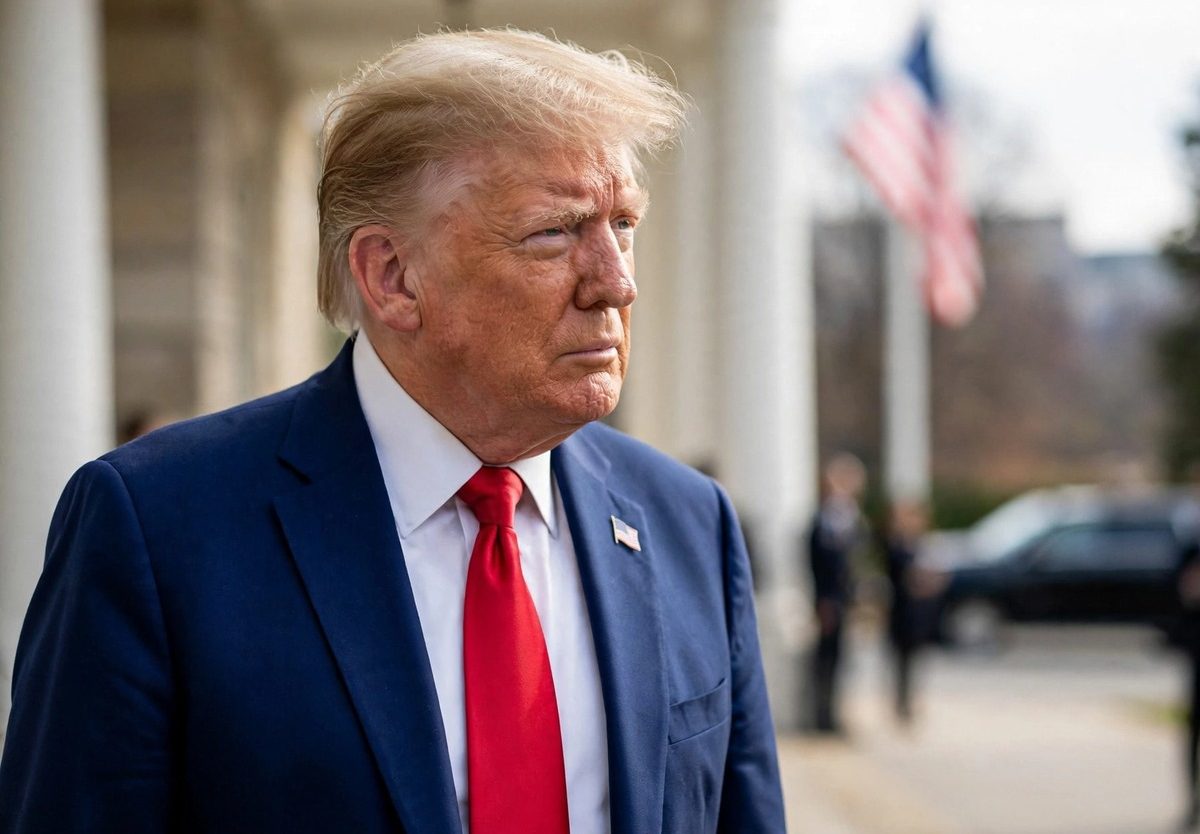
President Trump warned that the United States will decide its next move on Iran soon, while leaving open whether the response will be military, diplomatic or economic.
President Trump warned Iran that the United States is preparing to act, saying a decision would come “very soon” and later telling a rally crowd, “We’re gonna do a number.”
During a Tuesday exchange with reporters near the White House, Trump called Iran a failed country, cited inflation at 300 percent, and said its government was no longer paying troops or other workers. He did not identify the response under review, leaving open whether the next move would be military, diplomatic or economic.
Hours later in Wasilla, Alaska, he made the warning sharper. “Wait till you see what we do to Iran,” Trump told the crowd. He followed with, “We’re gonna do a number. We’ve had it.” He also made the boundary clear: Iran will not be allowed to obtain a nuclear weapon.
The Warning Has No Named Next Step
That escalation was not accompanied by a public order. Trump has not named the action he is considering, and his comments do not show whether the next move would use military, diplomatic or economic pressure. The jump from a reporter exchange to a stronger rally message gives allies and adversaries reason to watch closely.
The Message Reaches Beyond the Nuclear Issue
The White House’s 2026 counterterrorism strategy treats Iran as more than a nuclear question. It describes Tehran’s nuclear and missile capabilities as the Middle East’s greatest threat and says the government has supplied billions of dollars to proxy groups such as Hezbollah. The plan calls for ongoing U.S. military, intelligence and cyber operations against those networks until Iran can no longer threaten American interests or regional stability.
That strategy also ties the issue to maritime security. It makes safe passage through the Strait of Hormuz and the Red Sea a core national interest. It says the United States is ready for decisive action against the Iran-backed Houthis if commercial or military vessels are endangered. The result is a policy that links nuclear concerns, proxy warfare, shipping and the safety of American forces.
Sanctions Add Pressure Before the Decision
Financial pressure is tightening at the same time. Last week, the Treasury Department announced a major sanctions action targeting what it called the remaining pieces of Iran’s shadow fleet. The measure covered 17 vessels whose registrations spanned more than a dozen jurisdictions, along with companies accused of owning, running or managing them. Treasury said the ships carried millions of barrels of crude oil and naphtha, and that the move effectively neutralized most of the fleet used to transport sanctioned petroleum products.
Treasury tied that effort to a broader campaign using military pressure, a blockade and restrictions on Iran’s energy revenue. Its stated aim is to reduce the money available to Iran’s military and proxy forces. It also puts Trump’s remarks about unpaid troops in the context of a larger financial squeeze.
At the same time, Trump has left Iran an opening for a deal, but he has not publicly identified the terms or the next step. No public order followed Tuesday’s warnings, and the military, diplomatic or economic choice remains undisclosed.
Why It Matters
The stakes extend beyond the immediate exchange between Trump and Tehran. The administration is presenting nuclear capability, missile power, proxy activity, shipping security and energy income as connected parts of one problem. That framing places American forces, regional stability, commercial traffic and Iran’s government under pressure at the same time. It also means a decision announced in one area could affect several others, even though the president has not said which lever he plans to use.
The open question is not whether Trump wants to signal urgency. His remarks do that clearly. The uncertainty is what the signal will become. An economic step, a diplomatic move or military action would carry different risks, and public comments do not identify which is being considered. Until that choice is disclosed, Tehran, allies and adversaries must interpret a warning whose reach appears broad but whose immediate limits remain unstated. That uncertainty is the central consequence of the latest remarks.
Source: WLT Report

Leave a Comment