
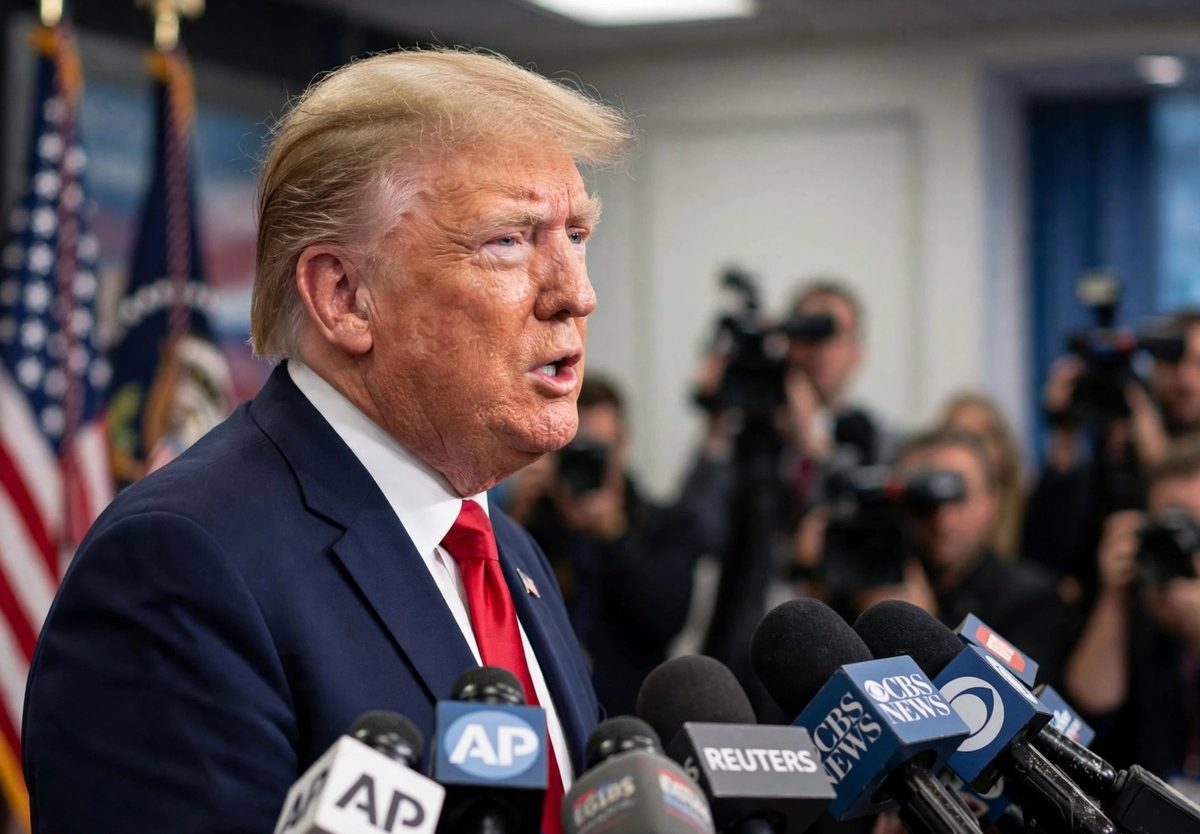
A federal judge ordered the Trump administration to stop airing government-funded ads that portrayed President Donald Trump favorably. Trump then offered to personally fund the campaign through MAGA Inc.
Jennifer Rochon, a federal judge in New York, ordered the Trump administration to pull government-financed television commercials that cast Donald Trump positively, even as the president said he would pay for the campaign himself. The Sunday order took effect immediately and reached spots that were still scheduled to run that night.
The commercials had appeared during NFL and college football broadcasts the previous week. They did not name a candidate for the approaching midterm elections. Instead, they used patriotic themes and promoted Trump’s message about restoring the country, confronting Washington, and fighting what he calls the deep state. That combination triggered a legal fight over whether public money could support advertising that avoided a formal endorsement but presented the president favorably.
The ruling was reported in this post:
The challenge came from watchdog group Common Cause, Robert Hunter, a Democratic candidate for an Alabama House seat, a New York labor union, and the union’s political action committee. The Democratic National Committee filed a similar complaint. They argued the campaign should not continue with government funding.
Rochon found that the challengers had met the test for emergency relief. In practical terms, she accepted that they had presented a strong legal claim, faced harm that a later ruling might not fix, and shown that blocking the ads served the public interest.
The administration had said the Department of Homeland Security, working through a vendor, had already booked placements through Sunday and instructed the vendor not to buy anything afterward. Rochon said that did not erase the live dispute. Her order required the administration to cancel, or make the vendor cancel, the challenged spots, including Sunday-night placements. It also barred DHS appropriations from being used to create, distribute, publish, or broadcast the material.
Trump’s response added a second track to the dispute. He said he would personally finance the national ads through MAGA Inc. instead of relying on the government. In one of the commercials, he says, “We will liberate America from these villains once and for all.” The offer came after opponents objected to taxpayer spending, but it did not erase the judge’s order against using DHS money.
The video connected to Trump’s offer appears below:
An X post also features the president’s statement and describes the proposed shift to private funding:
Why It Matters
The dispute matters because it brings several sensitive questions into one courtroom fight: what government agencies may say with public money, how closely official advertising can resemble political promotion, and whether favorable presidential messaging stays nonpartisan when it avoids naming a candidate. The commercials were presented as patriotic and national in scope, yet the challengers argued that the positive treatment of Trump made the spending improper. That tension is the heart of the case.
The ruling affects more than the ads already scheduled. It limits the administration’s ability to use agency funds for the entire process of making and distributing the challenged message. Trump’s offer changes the practical debate, because private financing could address the complaint about taxpayer money while leaving unresolved whether the same content would face another legal objection.
For challengers, the order is an immediate legal win, but it does not settle the larger dispute. For the administration and Trump’s supporters, the unresolved issue is whether the court’s reasoning applies only to public funding or reaches the broader message. That gap explains why the ruling produced both a concrete broadcast consequence and angry political reactions.
The court fight quickly spilled onto X. Several Trump supporters argued that judges should not suppress a message simply because opponents dislike it, while others said Trump could pay for the spots himself. The posts below show that reaction:
The immediate result is straightforward: the challenged government-funded ads must stop, while Trump’s private-funding offer leaves open whether a similar campaign can return under different financing. The ruling settles the broadcast question for the moment, but not the larger fight over presidential messaging and public money.
Source: WLT Report

Leave a Comment