
The FBI arrested a Saudi national who worked at OpenAI after alleging he hid an audio recorder in an executive room. Security later found another device in his bag.
The FBI has arrested Saudi national Abdulrahman Alfozan, an OpenAI engineer, after alleging that he put a covert audio recorder in a room used by company executives at its San Francisco headquarters. A complaint cited by the Justice Department also connects him to a second, similar device found in his unattended bag.
Alfozan, 35, joined OpenAI as an engineer in July 2025. The Justice Department says he was arrested on Oct. 9 and made his first federal court appearance on Oct. 13. The room was used for talks about confidential research, product plans, AI capabilities, government engagements, and business strategy. That made the alleged target far more sensitive than an ordinary office space.
The First Recorder Was Hidden Behind a Television
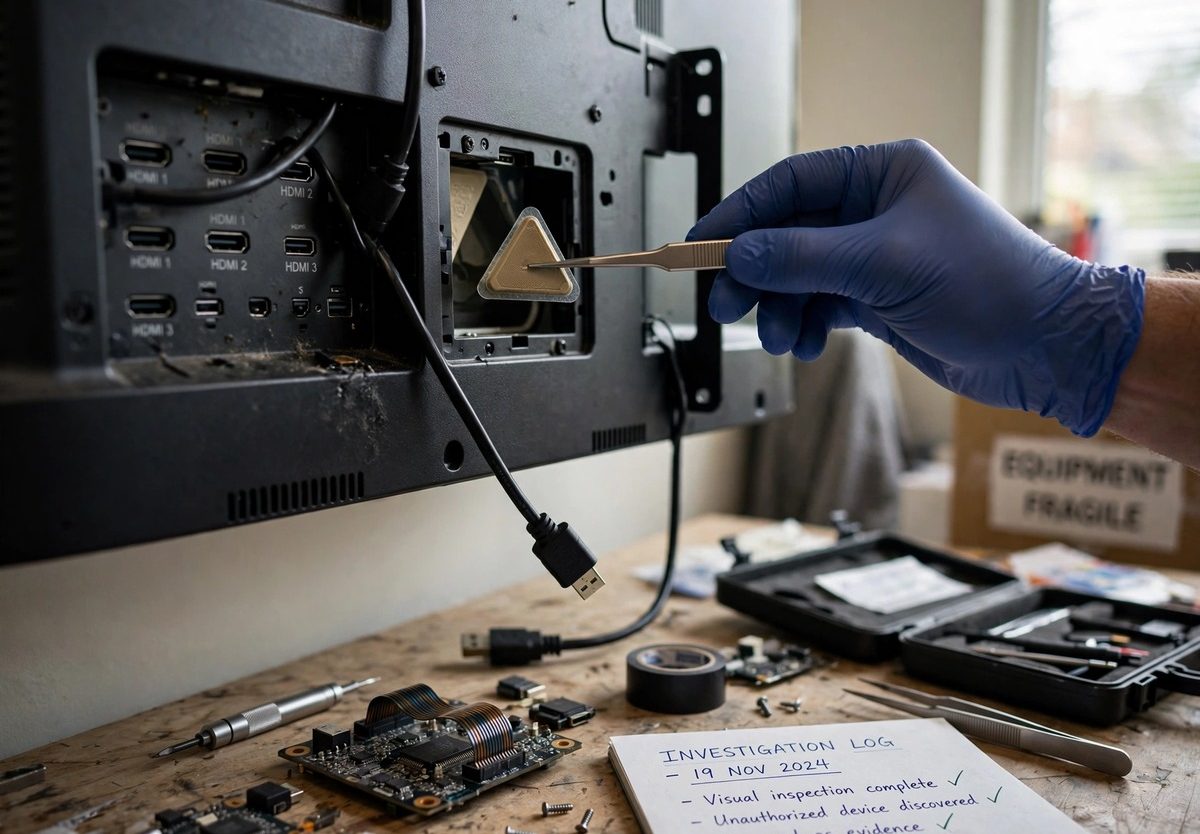
OpenAI personnel located the first recorder on Sept. 30. The complaint says it had been placed roughly two days earlier in a USB port behind a television. Toilet paper was used to conceal the device, and its contents were encrypted.
Cameras inside the office reportedly showed Alfozan near that conference room on multiple earlier occasions. The complaint says he was not authorized to enter the room or participate in the meetings held there. That footage is part of the government’s alleged link between him and the recorder.
Digital Questions Pointed Toward the Room
Before the device was found, investigators say Alfozan used a workplace productivity tool to seek information about office addresses, meeting spaces, room capacity, calendars, executive locations, and gatherings with outside partners.
The complaint also describes prompts from a chatbot account associated with his spouse. That account shared several identifiers and characteristics with Alfozan’s account, and it asked about constructing, adapting, setting up, testing, concealing, and remotely accessing an audio recorder. Other prompts dealt with continuous recording, Wi-Fi, live listening, and encryption for a memory card. The account also referenced the first device’s custom header and unique MAC address.
A Second Device Was Found in His Bag
Then, on Oct. 5, the complaint says Alfozan went into the executive room and appeared to inspect the space behind the television. Also on or about that date, OpenAI security personnel found a bag he had left unattended in another room and opened it. Among its contents were his wallet and identification, along with a second recorder similar to the first.
FBI Director Kash Patel said the complaint accuses Alfozan of hiding a covert recorder to capture sensitive communications about the company’s super-intelligence technology. The statement describes the government’s theory, while the arrest itself is not a conviction.
Why It Matters
The allegation matters beyond a routine workplace security dispute because the targeted room hosted conversations about research, products, government engagements, and business strategy. If the complaint is accurate, the alleged conduct focused on information that could affect the company’s competitive position and the privacy of people involved in those meetings. The encrypted recorder, office footage, and additional device create the government’s central narrative, but the arrest does not establish what was captured, who could reach it, or how a court will assess the evidence.
The case also raises a broader question about what happens when technical skills, workplace access, and digital tools intersect. The chatbot activity described in the complaint is material the government may present, not a final determination about who entered each prompt or what was ultimately done with the devices. Employees, executives, and outside partners tied to the confidential discussions may all have an interest in the outcome. Those unresolved issues give the court process importance beyond the allegations against this individual employee.
The Case Now Moves Through Federal Court
A conviction could bring a prison term of up to five years, a $250,000 fine, and supervised release for three years. The court process will determine which parts of the complaint can be proven.
Source: The Gateway Pundit


Leave a Comment