
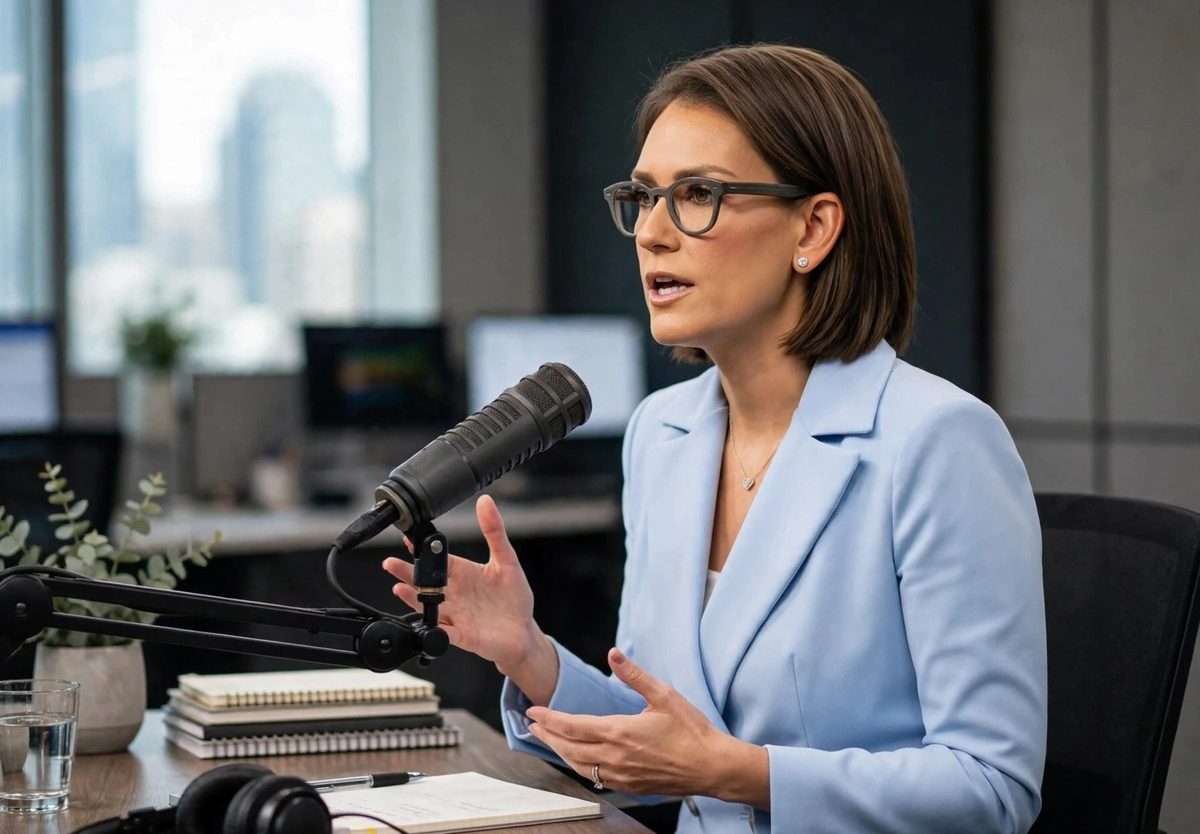
Jessica Tarlov said Fox drone footage left her stunned and suggested the Biden administration tightened its border response as an election approached.
Jessica Tarlov said Fox drone footage stunned her, then suggested the Biden administration changed its border response as an election neared.
During an appearance on The Breakfast Club while promoting her new book, Tarlov said she had been shocked by Fox video from above the southern border. It showed a heavy flow of people crossing even as the administration told Americans the border was effectively closed.
She described footage showing tens of thousands crossing in a month, with the flow reaching a couple hundred thousand at its peak. That image, she said, exposed a gap between the public message and what was happening on the ground.
The realization also turned inward. Tarlov acknowledged that she had been speaking from a climate-controlled New York studio while telling residents of Eagle Pass to endure the situation. She said the administration had no answer for what the video revealed, which made her reaction more than a standard partisan disagreement.
Then she tied the change to election pressure
Tarlov’s second point was more damaging to the administration’s public case. She said officials appeared to get their response together during the last year because an election was coming. Her wording framed the timing as political pressure, not simply a routine adjustment in policy.
That interpretation challenges the earlier description of the border as effectively closed. It also explains why her comments drew attention: they came from a prominent Democratic voice on Fox News who was describing both what she saw and how her own view changed.
Still, Tarlov used qualifying language and presented the election explanation as her own judgment. Her remarks do not establish every reason for the policy shift, but they put a direct question in public: did the administration act because conditions demanded it, or because voters were about to judge its record?
Why It Matters
The importance of this episode lies in the credibility gap it highlights. When officials describe a situation as controlled while images appear to show something far more serious, the public is left to decide which account deserves trust. That tension affects border communities that must deal with the consequences, national politicians defending their records, and voters trying to judge whether later policy changes were sincere or mainly strategic.
Tarlov’s remarks also show how political messaging can shape media discussion long after the underlying events have passed. Her reaction raises a direct question about timing: did the administration respond because conditions changed, because pressure grew, or because the election made the issue impossible to ignore? Her account provides a view, but it does not fully answer what drove the policy shift or whether the later response solved the problem.
What her comments add to the debate
For conservatives and Border Patrol officials who had rejected the administration’s description, Tarlov’s account gives them a new argument. They can point to her reaction to the drone video, her admission that she had misread the situation in Eagle Pass, and her claim that the election helped force a stronger response.
The political dispute now has a sharper focus. It is not only about how many people crossed or how officials described the border. It is also about whether the public message matched reality and whether the later change was built to last or timed to arrive before voting.
Source: The Gateway Pundit

Leave a Comment