
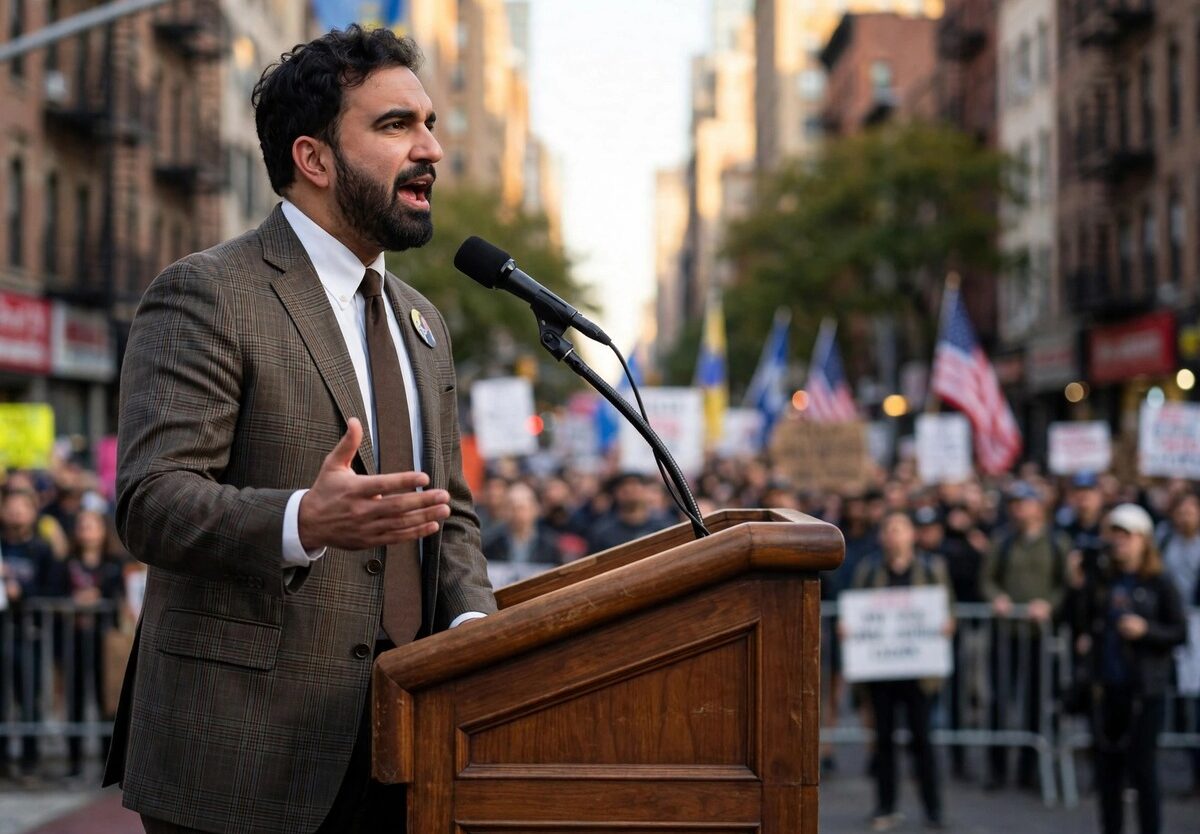
A proposed New York City delivery rule is colliding with Mamdani’s tax-the-rich agenda after Amazon warned customers about new fees.
New York City shoppers are being warned about new delivery charges, and Mayor Zohran Mamdani is blaming Amazon instead of the city rule that could create them.
The proposed law would require delivery drivers for companies such as Amazon to become employees instead of gig workers. Mamdani and his allies call that economic justice for workers. Amazon says the added labor costs would eliminate free delivery, turning a policy debate into a charge customers can see at checkout.
A customer shared a message after ordering liquid multivitamins for a child. The warning showed how quickly a city policy could affect an ordinary household purchase.
Mamdani responded by arguing that Amazon’s enormous size gives it room to absorb the expense. He said that if Jeff Bezos adds five dollars to an order, the reason is corporate greed, not the City Council’s effort to protect workers and improve safety on city streets.
That clash is tied to a larger fight over Mamdani’s promise to tax the rich. Politico reports growing tension between Mamdani and Gov. Kathy Hochul, who controls whether broader tax increases can move forward. Hochul has said she is open to a deal, but only on terms she accepts.
Politico describes Hochul as a moderate, yet she already agreed to a surcharge on expensive second homes. That allowed Mamdani to claim a tax-the-rich victory without winning the broader income-tax increases he wants.
Now his allies are planning demonstrations and using the growing socialist presence in Albany to pressure her. They are also presenting expanded free child care as a shared goal, hoping Hochul will see higher taxes as a way to strengthen that signature policy.
Why It Matters
The dispute matters because it turns a broad political promise into a cost question households can see at checkout. Mamdani presents the delivery proposal as worker protection and economic justice. Amazon’s response, as described here, shows how a business can translate an added operating cost into a charge aimed at customers. That does not settle whether the rule would improve working conditions, but it makes the tradeoff harder to hide.
For Hochul, the larger tax fight links affordability to competing demands. Mamdani and his allies want higher taxes on wealthy targets, while Hochul is trying to shape a deal around free child care. The second-home surcharge shows how the two sides can claim part of a win while disagreeing about broader income-tax increases. The pressure campaign will test whether public promises can survive the political cost of funding them.
For shoppers, workers, businesses, and families, the open question is who ultimately absorbs the cost of policies sold as relief or fairness. The central warning is not that every proposal has the same effect, but that slogans can obscure the bill’s final destination. If costs move through fees or prices, voters may judge the policy by what they pay rather than by how it was described. That tension now sits at the center of Mamdani’s fight with Amazon and his broader push to persuade Hochul.
Amazon’s decision to put the added cost directly before affected customers makes the broader debate concrete. Mamdani says the company should absorb the expense, while Amazon’s warning tells New Yorkers that the proposed worker rules may reach them through delivery fees. The political argument over who should pay is no longer abstract for the shoppers receiving those notices.
Source: hotair.com

Leave a Comment