
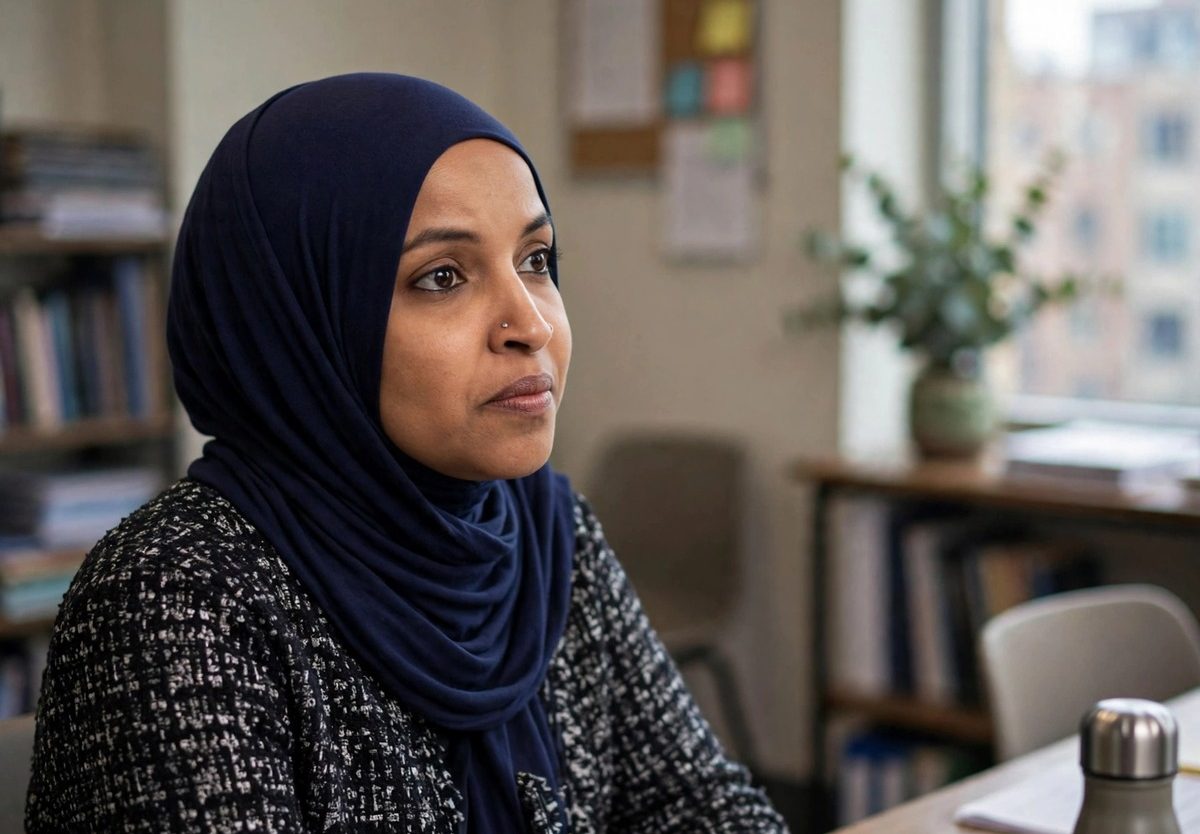
Jake Tapper questioned why Ilhan Omar did not turn herself in when a Biden-era investigation began. CNN legal analyst Elie Honig said that timeline could weaken her claim that the probe is politically motivated, while outlining possible legal theories and newer developments.
CNN host Jake Tapper said Rep. Ilhan Omar should have turned herself in to the Biden Justice Department when its inquiry began, raising the possibility that she could have resolved the matter with a fine instead of facing it under the Trump administration.
The exchange challenged Omar’s claim that the Trump Justice Department is using the investigation as a political weapon. CNN senior legal analyst Elie Honig said the inquiry’s Biden-era origin would make that argument difficult, even though he acknowledged that Trump had given Omar grounds to say she was being singled out.
The legal dispute involves allegations tied to immigration and possible false statements used to obtain immigration status. Honig said most federal immigration offenses carry a five-year maximum limitations period, which would normally put conduct from 2000 outside the window.
He then outlined possible exceptions. Prosecutors could examine whether false statements were used to obtain entry or legal status and followed by continued residence in the country. They could also look at later applications or renewal paperwork involving Omar or someone connected to her. A separate issue could involve obstruction within the last five years, such as efforts to coordinate accounts, destroy records, or influence witnesses.
Honig presented those as possible legal theories, not as findings that Omar committed any offense. That distinction matters because the age of the original allegations appears to be central to the legal debate.
Tapper then asked whether Omar would have been better off disclosing the matter to Biden officials, admitting a mistake, and paying a fine before the investigation reached the Trump Justice Department. His question suggested that an earlier resolution might have carried a lesser consequence.
Honig agreed that Omar might have received more favorable treatment under Biden. But he said the earlier start of the investigation also weakens any later argument that the Trump administration created the case for political reasons. At the same time, Honig said Trump’s involvement could still support Omar’s claim that she is being targeted.
Why It Matters
This matters because the dispute is not only about whether an old immigration question can still be pursued. It is also about who gets to define the investigation’s purpose. Omar’s political-motivation argument depends partly on the timing and conduct of the Trump Justice Department. The earlier Biden inquiry complicates that argument, but it does not answer whether every later step is fair, lawful, or supported by evidence. Honig’s comments therefore frame a question of credibility as well as criminal procedure.
The people most affected are Omar and the family members named in the report, along with the public trying to judge whether the probe reflects legitimate enforcement or partisan pressure. The possible legal theories show why the matter remains unresolved. An older allegation may appear time-barred, while later filings or conduct could change the analysis. A seized phone and subpoenas broaden the visible scope of the inquiry, but they do not by themselves establish wrongdoing. The central questions are what investigators have found, which allegations they are pursuing, and whether charges will follow.
The report says the inquiry may extend beyond immigration. U.S. Attorney Jeanine Pirro said several investigations were underway and suggested that financial issues could be included, such as Omar’s disclosures and her reported $30 million net worth. Those are reported areas of interest, not proven findings.
Trump also indicated that the probe involved what he described as money stolen through fraudulent activity in Minnesota. The report then said federal agents took Omar’s phone during a raid at her Washington, D.C., residence and that members of her family received subpoenas.
Those developments widen the story beyond the original immigration question. The Biden-era start may weaken Omar’s claim that the case is purely political, while the later expansion and Trump’s public role give her a basis to argue that she is being singled out. The final legal outcome remains open.
Source: The Gateway Pundit
Leave a Comment